Features
 Test recorder
 Integrations
 Testing service
 Roadmap
 Changelog
 Documentation
 Blog
Blog Customer stories
 About us
 Contact us
 XPath Selector Builder
 Example SaaS App
 E-mail testing inbox
Reflect.run is a solid no-code platform for browser automation. It’s clean, fast to adopt, and built for teams that want to move quickly without writing test scripts. Reflect.run uses generative AI to help simplify test creation and maintenance, making the testing process more efficient and accessible for teams.
But here’s the real question:
Will it still be the right choice as your test suite and team grow?
Most teams searching for Reflect.run alternatives aren’t unhappy with “no-code” testing.
They’re concerned about:
- Pricing that scales with usage
- Limits on runs or parallel execution
- Cloud-only workflows
- Maintenance as test volume increases
- Long-term cost predictability
In early stages, simplicity wins.
If your primary goal is reliable, maintainable web automation — without cost surprises or infrastructure overhead — there may be a better fit for your team.
This guide breaks down the best Reflect.run alternatives in 2026 — based on:
- Team size
- Testing scope
- Pricing model
- Maintenance burden
- Technical flexibility
What are the best Reflect.run Alternatives?
-
BugBug: Best end-to-end codeless tool for web app testing with unlimited test runs and team scalability. Many alternatives also include advanced AI features to further streamline the process.
-
BrowserStack: Comprehensive testing stack, ideal for large scale projects needing cross-platform (web/mobile).
-
TestSigma: Ideal for large-scale projects needing AI-powered, cross-platform testing (web, mobile, API).
-
Rainforest QA: Best for teams needing fast no-code testing with real user validation via crowdtesting.
-
Katalon Studio: Comprehensive testing for web, API, and mobile apps with both codeless and scripted options.
-
Testim: Enterprise-level automation with AI-powered test maintenance and rapid execution.
-
Playwright: Best for cross-browser web automation using a single API across Chromium, Firefox, and WebKit.
Choose the best TestRigor Alternative
Test easier than ever with BugBug test recorder. Faster than coding. Free forever.
Sign up for free
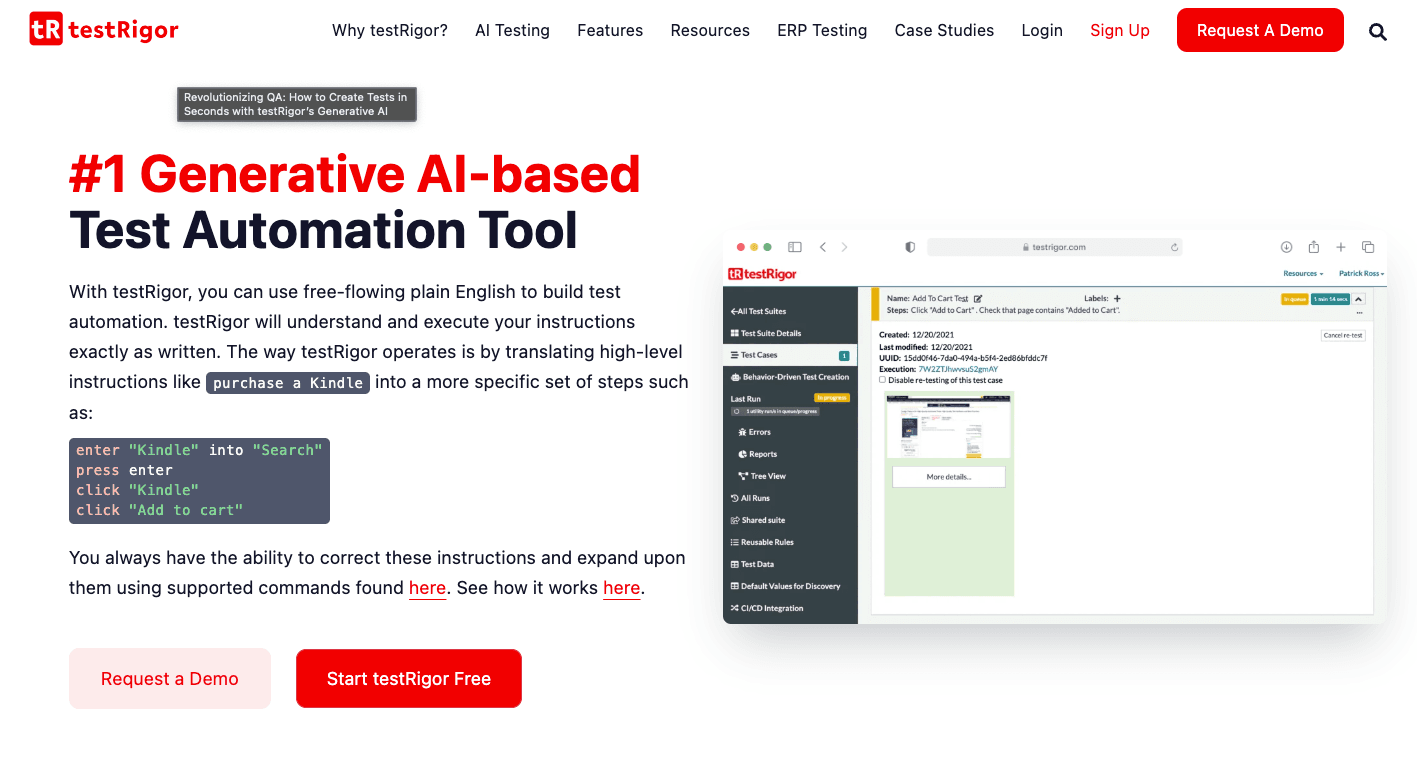
What is TestRigor?
What is Reflect.run?
Reflect.run is a popular end-to-end software testing platform that has gained recognition for its user-friendly interface and comprehensive testing capabilities. Reflect.run supports virtually any web action, including file uploads, drag-and-drop, and iframes, making it compatible with a wide range of technology stacks.
Unlike traditional code-based frameworks, Reflect.run allows users to build tests and create and execute automated tests for web applications without having to write any code. This no-code approach makes test automation accessible to non-developers and eliminates the need to write complex scripts. Reflect enables users to build end-to-end tests up to 10 times faster than with code-based frameworks, and test suites can be executed up to ten times faster than code-based regression software. However, as with any no-code tool, it has its own set of advantages and disadvantages.
Reflect.run also integrates with various CI/CD solutions to execute end-to-end tests automatically on any deployment.
Reflect.run Pros & Cons
Pros:
- User-Friendly Interface: A testing tool is known for its intuitive interface, making it accessible to teams with varying levels of technical expertise. You can create and maintain tests within minutes of registration.
- Clear Documentation: Reflect.run provides clear documentation, which facilitates user onboarding, helps users understand software features, and supports efficient testing workflows.
- Designed for Ease of Use: Reflect is designed to be user-friendly, reducing the learning curve significantly for new users.
- Cross-Browser Testing: It offers robust cross-browser testing capabilities, allowing engineers to ensure their applications function seamlessly.
Cons:
- Limited Customization: While it’s user-friendly, Reflect.run may lack the flexibility needed for highly customized test scenarios.
- Pricing: Reflect.run’s pricing model may not be budget-friendly for all organizations, particularly smaller ones or startups.
- Limited self-healing: Reflect.run does not offer advanced self-healing capabilities as some other tools, it still incorporates some level of robustness.
Reflect.run Pricing
Reflect.run offers tiered pricing plans, with costs varying based on the number of users and the level of support required. The exact pricing details can be obtained directly from the Reflect.run website.
Top Alternatives to TestRigor - Codeless Tools
Reflect.run Alternatives
BugBug — The Low-Maintenance Alternative to Reflect.run
Best for:
Startups, SaaS teams, and web-first product companies that want fast, maintainable automation — with predictable pricing and minimal overhead.
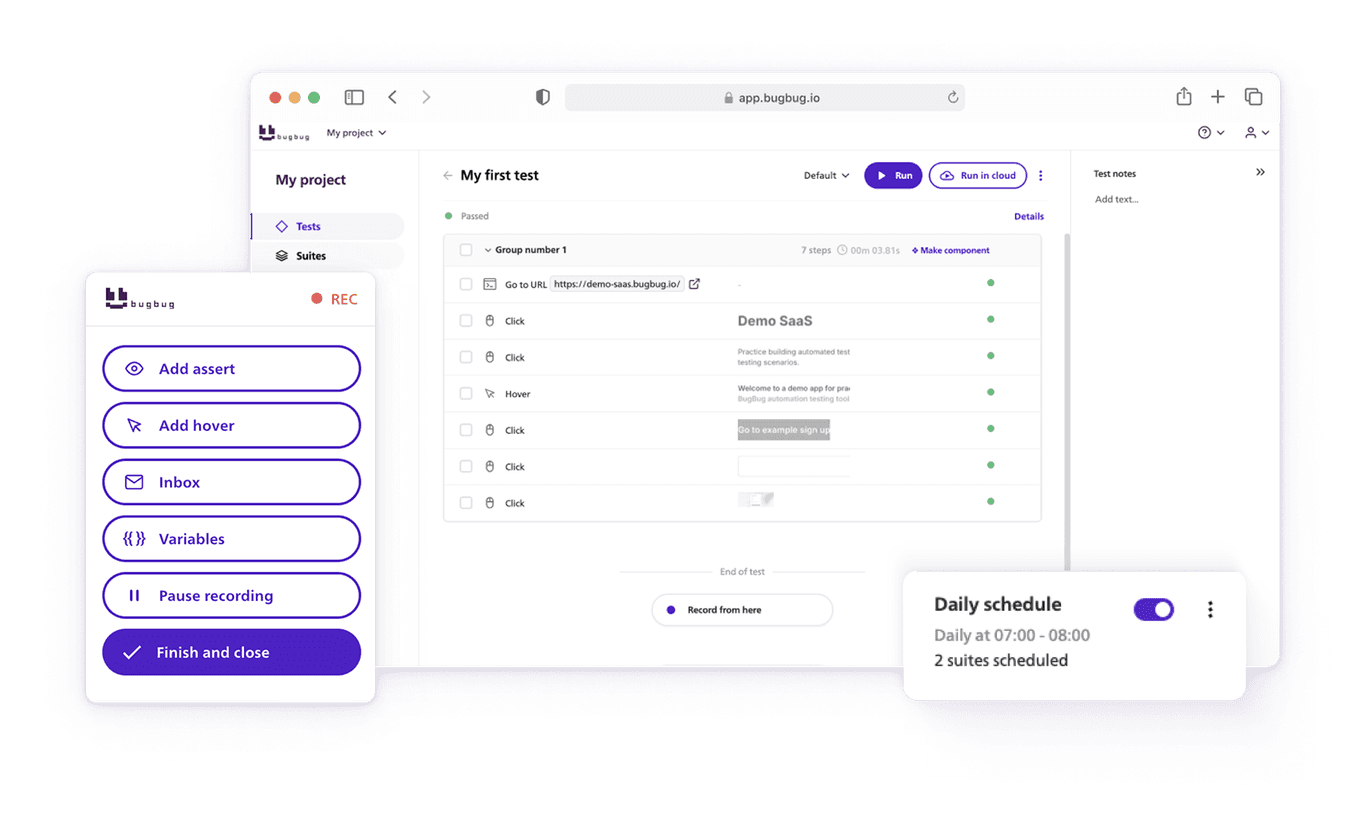
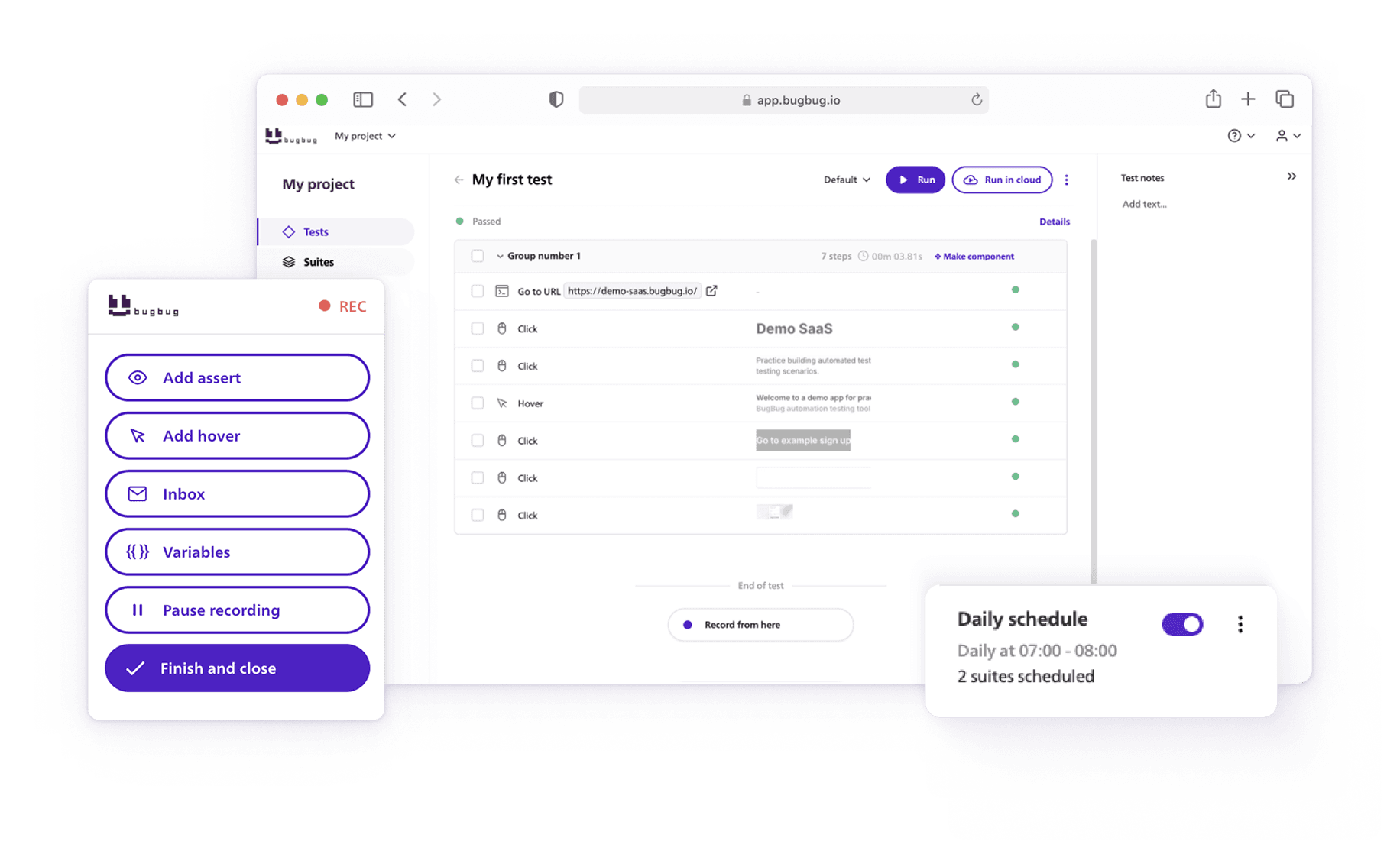
BugBug is built specifically for modern web application testing. Instead of a broad “testing ecosystem,” it focuses on what most SaaS teams actually need: stable E2E browser automation that doesn’t become a maintenance project. BugBug streamlines the testing process for developers by integrating seamlessly into existing workflows, reducing bottlenecks and making it easier to create and maintain tests.
If your product lives in the browser, BugBug removes much of the complexity (and scaling friction) that comes with heavier or usage-priced platforms. As a no-code testing tool, BugBug can democratize the testing process by enabling collaboration across different departments.
Key Features:
👾 Intuitive interface – easy for beginners, powerful enough for advanced QA
👾 Flexible execution – run tests locally or in the cloud
👾 Edit & Rewind – modify any step and replay from that exact point
👾 Built-in email testing – validate signups and password resets with bugbug-inbox.com
👾 No infrastructure required – no grids, drivers, or complex setup
👾 Custom JavaScript actions – add logic for edge-case scenarios
👾 Seamless integrations – connect with CI/CD tools, Slack, and your workflow
✅ Pros
- Fast setup (no infra, no heavy configuration)
- Low maintenance (stable selectors + visual editing)
- Strong debugging workflow (Edit & Rewind)
- Predictable scaling (no “cost spikes” as suite grows)
- Great fit for collaborative teams (QA + dev + product)
🚨 Cons
- Focused on Chromium (not a device-cloud replacement)
- Web testing only (not native mobile/desktop)
- Not built for heavy enterprise governance ecosystems
Reflect.run 🆚 BugBug: Similar category, different scaling model
Reflect.run and BugBug both target no-code web automation, but they solve different pain points at scale.
- Reflect.run is often chosen for quick cloud-based cross-browser testing.
- BugBug is chosen for low-maintenance automation with predictable scaling, especially in SaaS teams.
Cost & Scaling: Usage-based vs Predictable
Teams usually switch when they want to avoid pricing that grows with:
- execution volume
- minutes
- parallel runs
- expanding QA + product stakeholders
BugBug is typically preferred when the team wants automation that can grow without “meter anxiety.” With the possibility of scaling automation without increasing manual effort, especially through AI-driven no-code tools, teams can achieve more efficient workflows. No-code testing tools often utilize AI to simplify test creation and maintenance, making them more accessible to non-developers.
Stop Paying More as Your Test Suite Grows
Flat pricing. Unlimited collaboration. Minimal maintenance.
Flat pricing. Unlimited collaboration. Minimal maintenance.
👉 Start with BugBug’s Free Plan
Choose BugBug If:
- You primarily test web applications
- You want automation running in days — not weeks
- You want low maintenance and visual editing over fragile scripts
- You want predictable pricing as team + test volume grows
- You want QA, dev, and product to collaborate in one tool
Choose Reflect.run If:
- You strongly prioritize cross-browser coverage out of the box
- Your test volume is still relatively low
- Cloud-only execution fits your workflow
- You’re okay with pricing that scales with usage
- You want AI-powered automation that prepares your team for future changes in web development and testing practices
- You need comprehensive test results for every release, with immediate notifications when failures occur
When You Should Consider Other Alternatives
Depending on your scope, these tools may fit better:
-
BrowserStack → if you need real-device + cross-browser testing at enterprise scale
-
Testim → if you have a large web UI suite and want AI stabilization
-
TestSigma → if you need web + mobile + API in one platform with NLP-style authoring
-
Rainforest QA → if you want no-code automation + crowdtesting validation
-
Playwright / Cypress → if you want full framework control and can own infra + maintenance
BrowserStack
Best for:
Enterprise teams needing real-device and cross-browser coverage at scale.
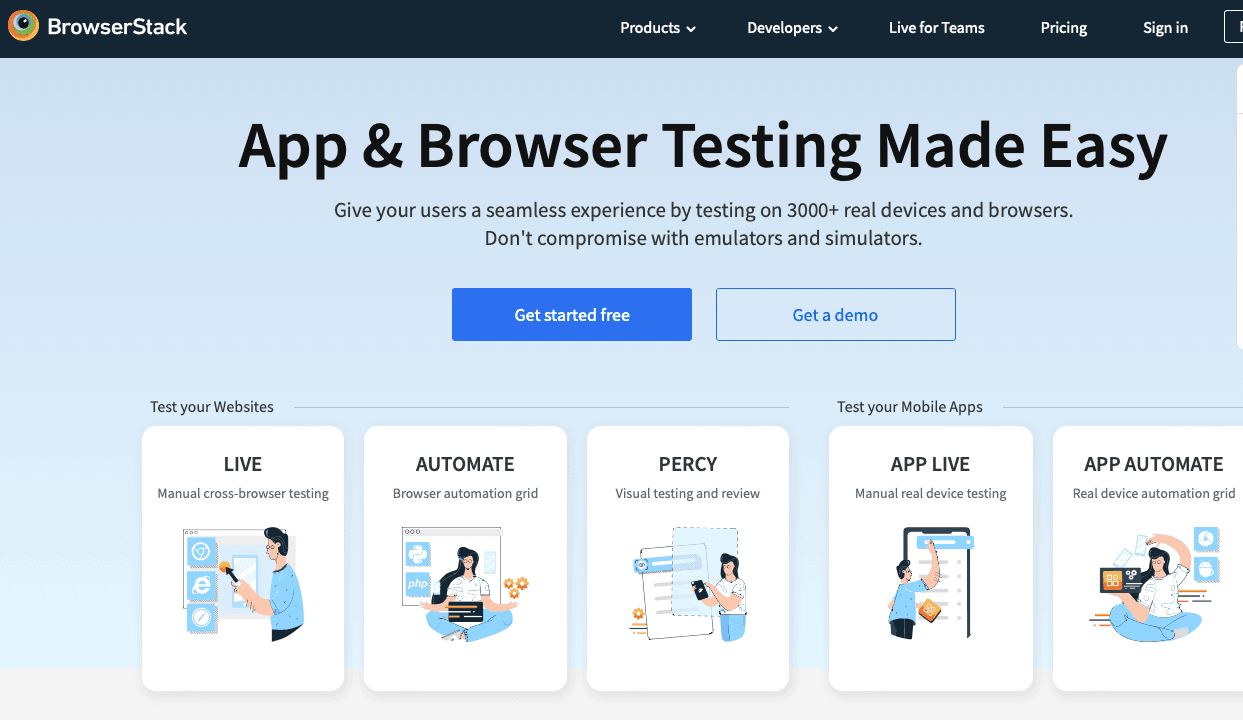
BrowserStack is one of the most popular options for cross-browser and mobile testing. It is a comprehensive cloud testing platform offering automated and manual testing across thousands of browser/device combinations. BrowserStack focuses on real-device testing, helping teams identify and debug errors on real devices, while Sauce Labs focuses on emulation-based device testing.
Key Features:
- 3500+ real device combinations
- Parallel execution
- Cross-browser automation grid
- CI/CD integrations
Pros:
- Massive device coverage
- Strong enterprise integrations
- Real-device testing
Cons:
- Can be expensive at scale
- Focused on coverage over simplicity
- Not a lightweight web-only solution
Testim

Best for:
Web teams managing large UI test suites with frequent UI changes.
Testim uses AI-powered smart locators and self-healing to reduce flakiness in complex test environments.
Key Features:
- AI self-healing locators
- Codeless + coded workflows
- Cloud execution
- Strong CI integrations
Pros:
- Good for large UI suites
- AI reduces maintenance
- Enterprise-ready
Cons:
- Custom pricing
- Web-focused
- More complex setup than lightweight tools
Rainforest QA
Best for:
Product teams wanting fast validation plus optional crowdtesting.
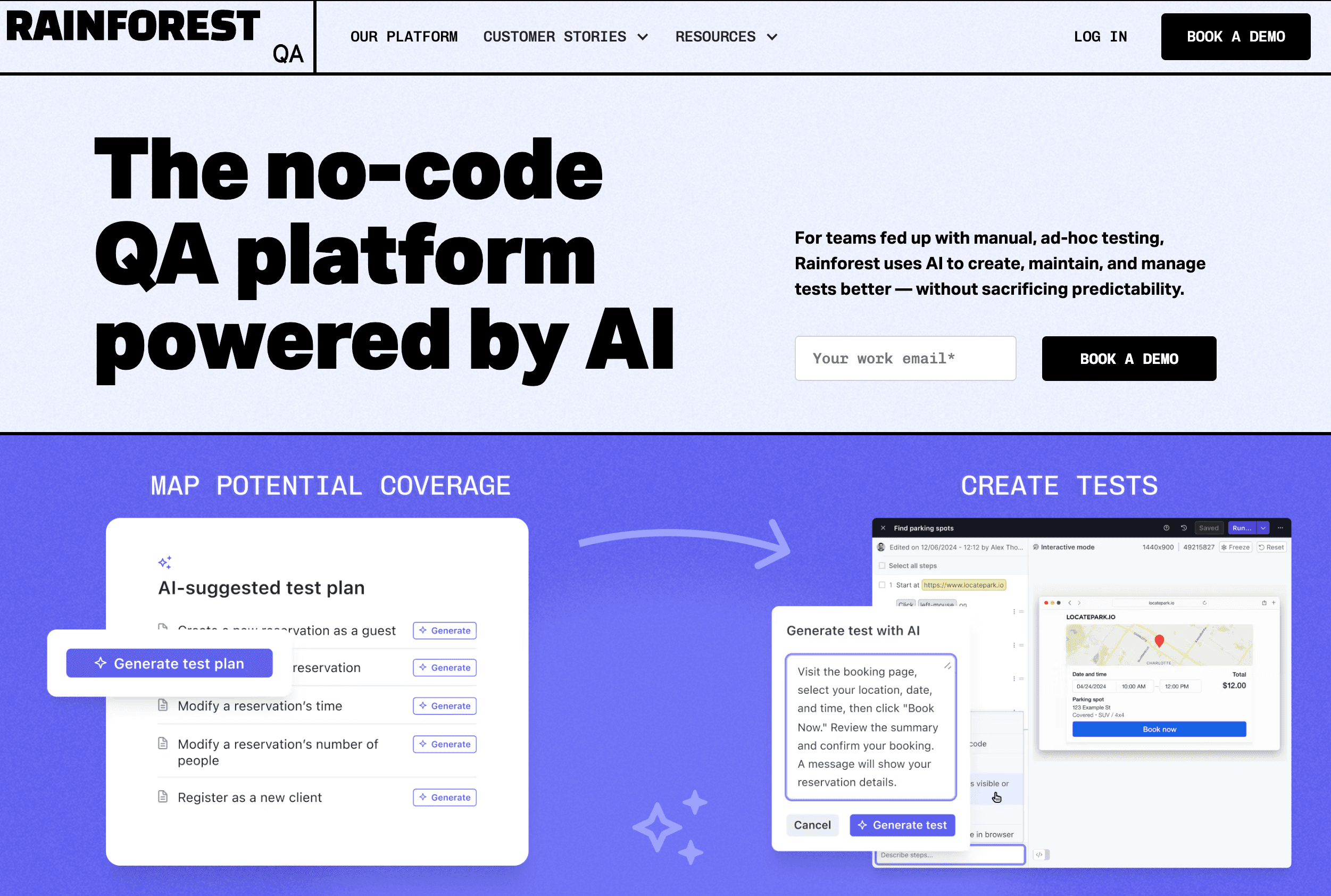
Rainforest blends no-code automation with on-demand human testers to validate workflows quickly.
Key Features:
- No-code visual builder
- Real browser cloud execution
- Crowdtesting layer
- CI/CD integrations
Pros:
- Hybrid automation + humans
- Easy for non-technical teams
- Fast validation cycles
Cons:
- Pricing scales quickly
- Less control over architecture
- Not ideal for deep customization
TestSigma
Best for:
Teams needing web + mobile + API coverage in one AI-powered platform.
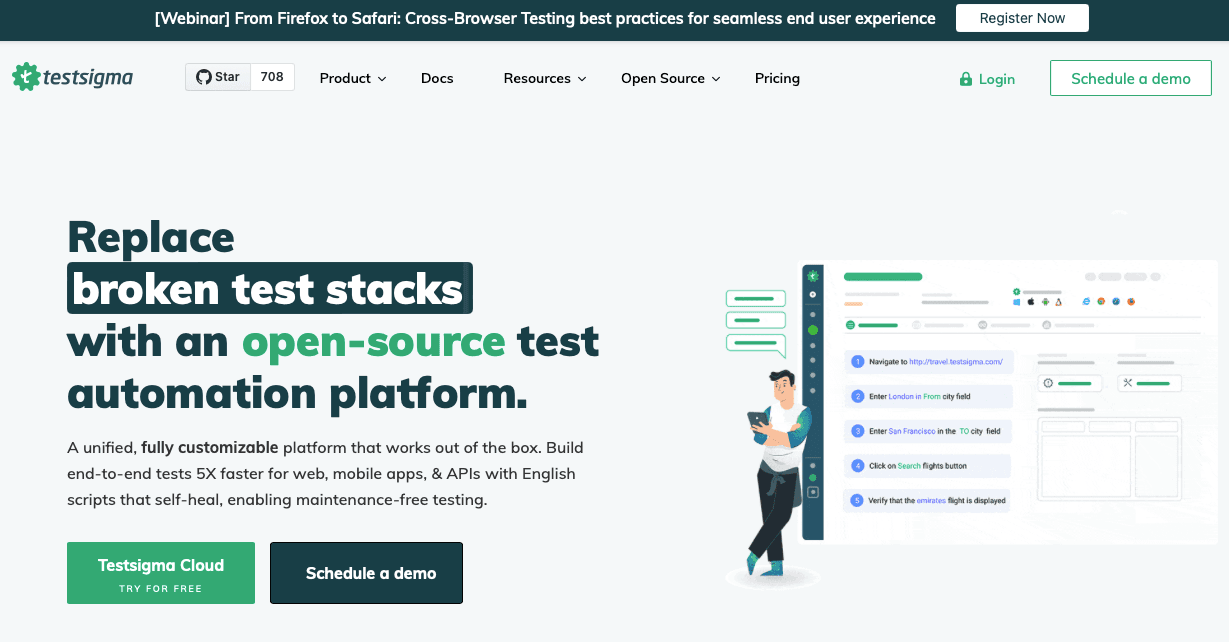
TestSigma enables natural-language test creation and multi-platform coverage through a cloud-based interface.
Key Features:
- NLP test authoring
- AI-driven maintenance
- Web, mobile, API support
- Cloud-based execution
Pros:
- Multi-platform coverage
- AI-assisted maintenance
- Scalable enterprise features
Cons:
- Higher pricing tier
- Learning curve for advanced flows
- Fully cloud-dependent
Katalon Studio

Best for:
Hybrid teams needing codeless + scripting flexibility.
Katalon combines IDE-based automation with web, API, mobile, and desktop support.
Key Features:
- Record + script workflows
- Multi-platform testing
- Groovy-based scripting
- Cross-browser support
Pros:
- Broad coverage
- Mature ecosystem
- Strong integrations
Cons:
- Per-user pricing
- IDE performance can slow at scale
- Steeper learning curve
Playwright

Best for:
Developer-led teams wanting full control through code.
Playwright is a modern automation framework supporting Chromium, Firefox, and WebKit via code.
Key Features:
- Cross-browser automation
- Auto-wait APIs
- Headless/headed modes
- Full scripting flexibility
Pros:
- Powerful and flexible
- Strong debugging tools
- Ideal for modern JS stacks
Cons:
- Requires coding
- Infrastructure ownership required
- Ongoing maintenance responsibility
Pricing Model Comparison
| Tool | Pricing Model | Free Plan | Scaling Risk |
|---|---|---|---|
| BugBug | Flat pricing (from $189/ Month) | Yes | Predictable |
| Reflect.run | Usage-based tiers | Limited | Grows with usage |
| BrowserStack | Device/minute based | Limited | High at scale |
| Testim | Custom enterprise pricing | Trial | High |
| Rainforest QA | Custom + usage | Trial | High |
| TestSigma | Per-user / tiered | Trial | Moderate–High |
| Katalon | Per-user licensing | Free tier | Scales per seat |
| Playwright | Free (open-source) | Yes | Infra ownership cost |
When an Open-Source Framework Might Be the Better Choice
Codeless tools aren’t the right fit for every team.
You may be better off with a framework like Playwright, Cypress, or Selenium if:
- You have strong in-house engineering resources dedicated to test automation
- You need deep customization or complex test architecture
- Your application includes highly dynamic flows that require advanced scripting
- You want full control over execution, infrastructure, and CI pipelines
- You’re integrating automation tightly into an existing engineering ecosystem
These frameworks are often preferred by developers who want to write custom test scripts and have the flexibility to tailor tests to specific needs.
Frameworks offer maximum flexibility and control — but they also require ownership:
- Infrastructure setup
- Environment management
- CI configuration
- Ongoing maintenance
If your team is comfortable managing that complexity, a framework can provide long-term power and customization. However, the learning curve for traditional coding-based testing tools is generally higher than for no-code testing tools, which are easier for new users to adopt.
In conclusion, codeless test automation has become an essential part of the high-quality software testing landscape, enabling organizations to streamline their testing processes and improve software quality.
While Reflect.run is a notable player in this field, there are several alternatives available in 2023, each with its unique features and strengths. The choice of the best alternative depends on your specific testing requirements, budget, and team expertise.
Evaluating these alternatives will help you find the perfect fit for your organization’s testing needs.
Happy (automated) testing!